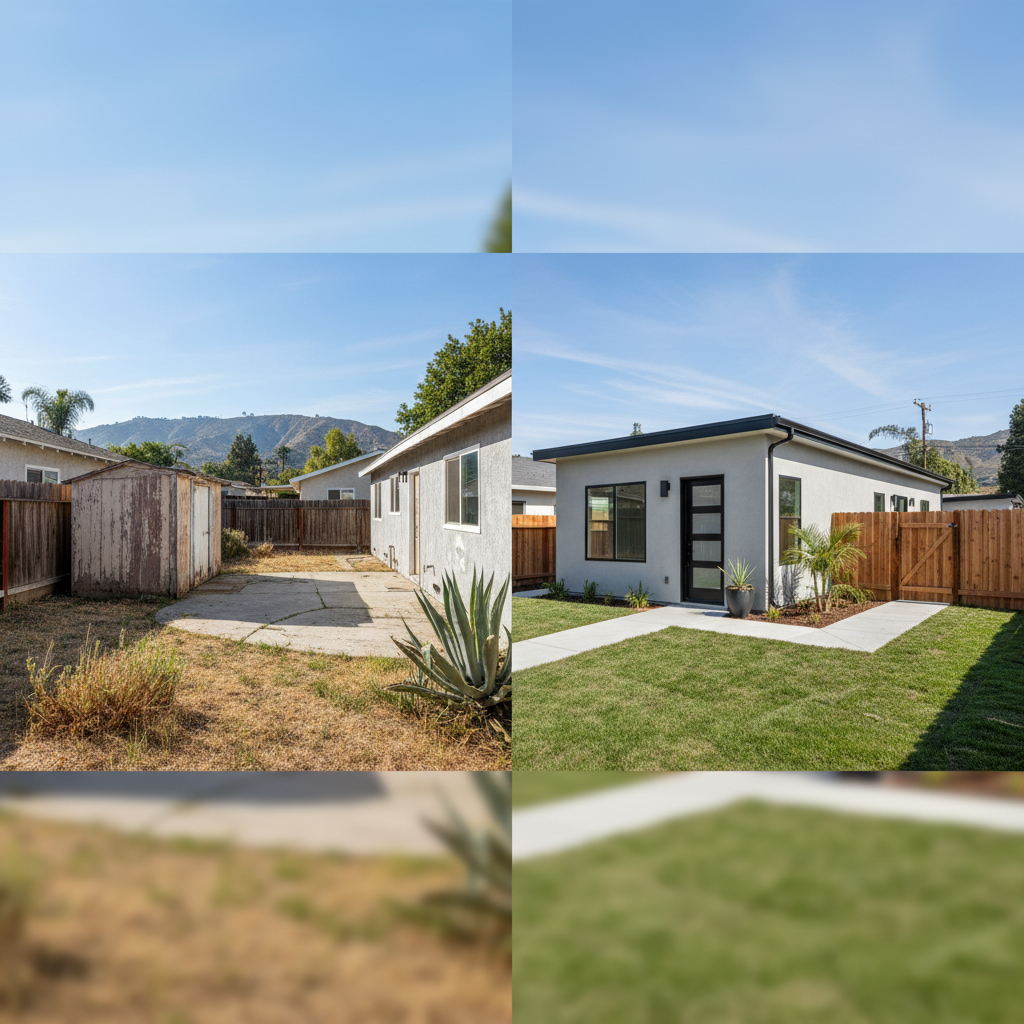
Alright, Anaheim homeowners, let's talk about the bedrock for your detached ADU. I know, foundations aren't exactly the most thrilling topic, but they're absolutely, positively critical. Seriously, this is what your entire investment rests on, and getting it right means you won't be losing sleep for decades. You've got two main choices for a detached ADU: a slab-on-grade foundation or a raised foundation with a crawl space. Both have their upsides, but usually, one just makes more sense for us here in Southern California.
Slab-on-Grade: Just Poured Concrete
A slab-on-grade foundation is pretty straightforward. It's basically a thick concrete pad, poured right onto ground that's been prepped and leveled. Think of it as one big, solid piece that does double duty as both your foundation and the ADU's floor.
Cost
Generally speaking, slab foundations are the cheapest way to go, at least initially. You won't need as much digging or as many materials compared to a raised foundation. For a 500-square-foot ADU, you might see slab foundation costs somewhere between $7,000 and $12,000. That makes them a popular pick for folks who want to keep those first expenses down.
Durability
Slabs are tough. They're a big block of concrete, and if they're properly reinforced and poured on stable soil, they can last a really long time. Plus, they're less inviting for pests like termites since there's no crawl space for them to hide out. But here's the thing: concrete is porous, and it can crack. That often happens because of changing weather and moisture, especially if your drainage isn't quite right.
Maintenance
Maintaining a slab is usually pretty low-key. You'll want to check for cracks every six months to a year and seal them up quickly. The big catch, though, is that all your plumbing and electrical lines are buried right in the concrete. If you get a leak or an electrical problem down the road, fixing it can be a huge headache. We're talking about breaking up the concrete floor, unfortunately.
Appearance
Aesthetically, a slab foundation means your ADU sits right on the ground. It gives it a very modern, clean look. No steps up into the unit, which can be a real bonus for accessibility.
Raised Foundation: Getting Off the Ground
A raised foundation, which people often call a crawl space foundation, lifts your ADU up off the ground. It uses concrete footings and perimeter walls, creating a space underneath that's usually 18 to 48 inches high.
Cost
Raised foundations typically cost more to build than slab foundations. Why? Well, there's more material and labor involved for the stem walls, piers, and that whole subfloor system. For that same 500-square-foot ADU, you might be looking at $12,000 to $25,000 for a crawl space. While the initial savings of a slab can look good, it's really smart to think about the long haul.
Durability
Raised foundations are fantastic for certain soil conditions, especially those expansive clay soils that can swell and shrink with moisture. While Anaheim's soils are generally pretty well-drained and often don't expand much—especially in areas like The Platinum Triangle with its sandy silt and fine sands—some spots can still have that expansive clay. Being elevated also gives you better protection against potential flooding, and in Southern California, with our unpredictable weather, that's always something to consider.
Maintenance
This is where raised foundations truly shine. That crawl space gives you easy access to all your plumbing, electrical wiring, and HVAC systems. If something needs fixing or changing, a plumber or electrician can just get right under there without tearing up your floor. You do need to make sure the crawl space is properly ventilated and kept free of pests, but that's just part of regular home upkeep.
Appearance
With a raised foundation, your ADU will have a few steps leading up to the entrance. This gives it a more traditional home look. You can often design it so it blends right in with your existing house's style, especially if your main home also has a raised foundation.
What I Recommend for Anaheim Homeowners
For most detached ADUs here in Anaheim, especially considering our seismic activity and the varying soil conditions we can encounter, I really lean towards a raised foundation with a crawl space.
Here's my thinking:
- Long-Term Maintenance: This is huge, truly. Being able to easily get to and fix utilities under the floor without major demolition is a massive plus. I've seen too many homeowners kick themselves for choosing a slab when a pipe bursts years later.
- Adapts to Soil: Even though many parts of Anaheim have good soil, some areas do have that expansive clay. A raised foundation creates a buffer against soil movement, which is super important for keeping your structure solid over time.
- Seismic Resilience: California demands reinforced foundations to keep buildings standing during earthquakes. Both types can be engineered to meet these standards, but a raised foundation's flexibility can sometimes offer an edge.
- Comfort: A crawl space provides an air gap. This can actually help with insulation and moisture control, making the inside of your ADU more comfortable.
Yes, a raised foundation usually costs more upfront. But when you think about how much easier, less disruptive, and ultimately cheaper repairs will be over the ADU's lifetime, that initial investment often pays for itself. You're building a home, after all, not just a structure, and you want it to be as resilient and easy to care for as possible.
Before any digging starts, always, always get a thorough soil report for your specific property. This isn't optional. A structural engineer will use that report to design the best foundation for your unique site conditions, making sure it meets all Anaheim building codes and seismic requirements. Here at ADU Construction Co, we always make sure these crucial steps are covered, because a solid foundation is truly where a solid ADU begins.